


If you are searching “can I sue the doctor” after treatment went wrong, the short answer is yes, potentially. UK law allows patients to seek compensation when negligent healthcare causes avoidable injury or makes an existing condition worse. A disappointing result or medical complication alone does not automatically establish negligence.
Direct answer: Yes. A clinical negligence claim may be possible if a healthcare professional owed you a duty of care, provided treatment below an acceptable standard, and that failure caused avoidable injury or loss. A poor outcome alone is not enough. The evidence must link the substandard care to the harm you suffered.
Key Facts at a Glance
| Question | Key point |
| Can negligent medical treatment lead to a claim? | Yes, if substandard care caused avoidable injury or loss. |
| What must usually be proved? | Breach of duty and causation. |
| Can you claim for NHS treatment? | Yes. Claims can arise from the NHS as well as private healthcare. |
| What is the usual time limit? | In England and Wales, court proceedings generally need to begin within three years, subject to exceptions. |
| Does making an NHS complaint pause the claim deadline? | No. A complaint does not stop the limitation period running. |
| Will every case go to court? | No. NHS Resolution reported that 84% of clinical negligence claims were resolved without formal legal proceedings in 2025/26. |
| What evidence can matter? | Medical records, independent expert evidence, financial records, and a clear treatment timeline. |
Key Takeaways
- A bad medical outcome is not enough on its own to prove negligence.
- You normally need to show both substandard care and a causal link to your injury.
- Medical records and independent expert evidence can become central to the investigation.
- In England and Wales, the usual limitation period is three years, although exceptions exist.
- An NHS complaint and a compensation claim have different purposes.
- Court proceedings are not inevitable, and settlement or other dispute resolution may be possible.
Can I Sue the Doctor in the UK? What You Must Prove
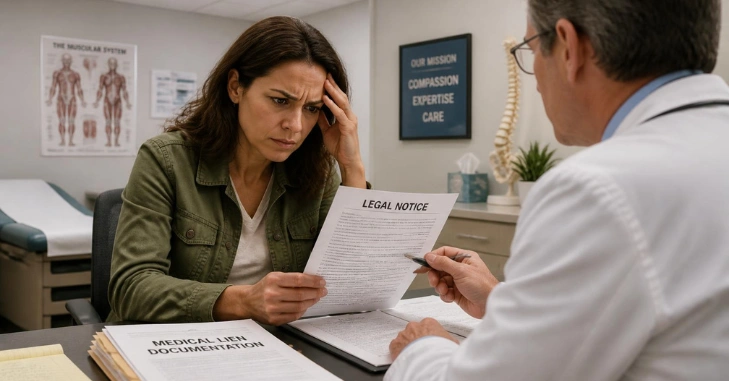
Can I sue the doctor? A successful clinical negligence case normally depends on two central issues: breach of duty and causation. NHS Resolution explains that care must have fallen below an acceptable professional standard and that this failure must have caused the injury. Both parts matter, so evidence of a mistake without resulting harm may not produce a compensation claim.
Breach of Duty
Healthcare professionals owe patients a duty to exercise reasonable skill and care. The question is whether the treatment fell below the standard reasonably expected from a competent practitioner in the circumstances. Another competent clinician choosing a different treatment does not automatically mean the care you received was negligent.
Causation
You must also establish that the breach caused avoidable injury or made your condition worse. For example, a delayed diagnosis might amount to poor care, but compensation still depends on whether the delay changed your health outcome. If the same harm would probably have occurred with appropriate treatment, causation can be difficult to prove.
What Types of Medical Negligence May Lead to a Claim?
Clinical negligence can arise in hospitals, GP surgeries, clinics, and other healthcare settings. The facts of each case determine whether the legal test is satisfied, rather than the label placed on the medical mistake. An independent medical expert is often needed to assess the treatment and its consequences.
Examples can include:
- A missed or unreasonably delayed diagnosis.
- Failure to refer a patient for appropriate investigations or specialist care.
- Surgical errors that cause avoidable injury.
- Medication errors involving the wrong medicine or dosage.
- Poor monitoring after treatment or surgery.
- Failure to respond appropriately to test results.
- Inadequate management of pregnancy or childbirth.
- Treatment without legally adequate informed consent in circumstances that result in injury.
Problems involving primary care are covered in more detail in Justic’s GP negligence claims guide. Readers dealing with a delayed cancer diagnosis may also find the prostate cancer misdiagnosis guide useful. These pages address more specific forms of alleged clinical negligence.
Who Do You Make the Claim Against?
The individual clinician is not always the legal defendant named in a negligence case. Depending on where the treatment happened, a claim may involve a GP or practice, an NHS trust, another healthcare provider, or more than one defendant. AvMA notes that cases can involve both a GP and a hospital trust where responsibility overlaps.
The same broad principles can apply to private treatment, although the contractual and indemnity arrangements may differ from NHS care. Identifying the proper defendant early matters because the pre-action process requires the allegations to be directed to the responsible party. A specialist solicitor can investigate which organization or practitioner should answer the claim.
What Evidence Can Help Prove Medical Negligence?
Clinical negligence cases often turn on detailed evidence rather than a patient’s recollection alone. Medical notes can establish what symptoms were reported, which tests were requested, what treatment was given and how clinicians responded over time. Expert evidence can then assess whether that care met an acceptable standard and whether different treatment would probably have changed the outcome.
Useful evidence may include:
- GP and hospital medical records.
- Test results, scans, and laboratory reports.
- Prescription and medication records.
- Referral letters and discharge documents.
- Photographs showing an injury or physical changes.
- A personal chronology of appointments and symptoms.
- Letters or emails exchanged with the healthcare provider.
- Evidence of lost earnings or other financial losses.
- Receipts for treatment, care, travel, or equipment.
- Details of relatives or carers who witnessed the impact of the injury.
You have a legal right to ask a health or care organisation for personal information it holds about you through a subject access request. NHS England says a request for medical records should normally go to the organization holding them, such as your GP practice or hospital trust. Current NHS guidance states that organizations normally have one calendar month to respond to a subject access request, although complex requests can take longer.
How Long Do You Have to Make a Medical Negligence Claim?
For claims governed by the law of England and Wales, section 11 of the Limitation Act 1980 sets the general personal injury limitation period at three years. The period may run from the negligent event or from a later “date of knowledge” when you knew, or could reasonably have known, that significant harm was connected with the treatment. Special rules apply in situations involving children, mental capacity, and some claims following a death.
Do not assume that complaining to the NHS protects your legal deadline. AvMA specifically warns that pursuing an NHS complaint does not stop the three-year limitation period from running. Clinical negligence investigations can require records and expert reports, so seeking advice well before the deadline can be important.
What about Scotland and Northern Ireland?
The UK does not have one identical civil procedure for every clinical negligence case. England and Wales use the Limitation Act 1980 framework described above, while Scotland and Northern Ireland operate under separate legislation and procedural systems. Although three years is also a common starting point for competent adult claimants elsewhere in the UK, you should obtain jurisdiction-specific advice before relying on a deadline.
The 7 Main Steps in a Clinical Negligence Claim
The precise process depends on the facts, but claims in England and Wales normally involve investigation before court proceedings are considered. The Clinical Disputes Pre-Action Protocol encourages early information exchange, expert investigation, and attempts to resolve disputes without litigation. Court action is treated as a last resort rather than an automatic next step.
- Record what happened. Create a dated timeline covering symptoms, appointments, treatment, and the harm that followed.
- Obtain your medical records. Request records from the relevant GP practice, hospital, or healthcare provider.
- Get specialist legal advice. A solicitor can assess limitation, identify possible defendants, and decide whether further investigation is proportionate.
- Obtain independent medical evidence. Appropriate experts may consider breach of duty, causation, your condition, and prognosis.
- Send a formal Letter of Claim if supported. This outlines the alleged negligence, injuries, causal link, and financial losses.
- Consider the defendant’s response and settlement options. Under the Pre-Action Protocol for the Resolution of Clinical Disputes, a defendant should normally acknowledge the Letter of Claim within 14 days and provide a reasoned response within four months.
- Issue proceedings if the dispute cannot be resolved. Negotiation, mediation, or another form of alternative dispute resolution may avoid a trial.
Many cases end without a courtroom trial. NHS Resolution’s Annual Report and Accounts 2025/26 states that a record 84% of clinical negligence claims were resolved without formal legal proceedings. That figure does not guarantee settlement in an individual case, but it shows that issuing a claim does not automatically mean attending a trial.
What Compensation Can a Successful Claim Cover?
Compensation in clinical negligence is intended to compensate for injury and resulting loss rather than punish a healthcare professional. The amount depends on the nature of the injury, its long-term effects, and the financial consequences attributable to the negligent treatment. Two people with similar medical mistakes can therefore receive different awards because their resulting losses differ.
Depending on the case, damages may address:
- Pain, suffering, and loss of amenity.
- Past and future loss of earnings.
- Additional medical or rehabilitation costs.
- Professional care or assistance provided by relatives.
- Mobility aids, equipment, or home adaptations.
- Travel expenses linked to treatment.
- Other reasonable financial losses caused by the injury.
Keep documents showing the financial effect of the harm wherever possible. Payslips, invoices, receipts, and records of care can help establish claimed losses. The formal Letter of Claim should provide an outline of financial loss and the heads of damage being pursued.
Medical Negligence Claim, NHS Complaint, or GMC Concern?
These routes have different purposes, and one does not automatically replace another. A compensation claim focuses on financial redress for legally proven injury, while the NHS complaints process can investigate concerns about care. The GMC considers regulatory concerns about doctors and can take action where its standards have not been met.
| Route | Main purpose | Compensation? | When it may be relevant |
| Clinical negligence claim | Compensation for injury and financial loss | Potentially, if liability is established | Where substandard treatment caused avoidable harm |
| NHS complaint | Explanation, investigation, and response to concerns | Not a substitute for a damages claim | Where you want the service to investigate what happened |
| GMC concern | Professional regulation and public protection | No damages award | Where conduct, performance, or another serious regulatory issue may require GMC consideration |
An NHS complaint can still be useful because it may clarify facts and produce an investigation response. In England, free NHS complaints advocacy may be available, and unresolved NHS complaints can potentially progress to the Parliamentary and Health Service Ombudsman. Keep the legal limitation date separate because the complaints process does not pause it.
How Can You Pay for a Clinical Negligence Solicitor?
Some specialist firms handle suitable clinical negligence cases under a conditional fee agreement, commonly called a no-win-no-fee agreement. Funding terms vary, so you should ask about success fees, insurance, deductions, and situations where costs could become payable before signing anything. Existing legal expenses insurance may also be worth checking before entering a new funding agreement.
Justic has a separate No Win No Fee solicitors guide explaining checks to make before choosing a firm. For serious maternity cases, the site’s birth injury lawyer guide covers solicitor selection in that more specialized area. Funding should be considered alongside the strength and likely value of the case, not in isolation.
What Should You Do If You Think Your Treatment Was Negligent?
Start by preserving information rather than trying to prove the whole case yourself. Write down the treatment dates, request your records, and keep documents showing the physical and financial effects of the injury. If the incident may be approaching a legal deadline, seek specialist advice promptly rather than waiting for an NHS complaint to finish.
A solicitor who regularly handles clinical negligence can assess the records, limitation period, and need for independent expert evidence. They can also identify the appropriate defendant and explain whether the likely value of the claim makes further investigation proportionate. Early advice does not guarantee that a case will succeed, but it can prevent avoidable problems with evidence and deadlines.
Your Next Step
If negligent medical treatment may have caused you avoidable harm, ask, “Can I sue the doctor?” and start by gathering your medical records and establishing the relevant dates. Consider specialist clinical negligence advice before the limitation period becomes close, particularly if your medical history is complex. Taking these steps can help you understand whether the available evidence supports a viable compensation claim.
This article provides general legal information and is not a substitute for advice about an individual case. Clinical negligence rules and procedures can differ across England and Wales, Scotland, and Northern Ireland, and the correct deadline depends on the facts.
Frequently Asked Questions
Yes, negligent treatment provided through the NHS can lead to a clinical negligence claim if the required legal tests are met. You still need evidence of substandard care and a causal link between that care and your injury. Depending on the treatment setting, the defendant may be an NHS trust, GP practice, or another responsible provider.
A mistake alone will not normally be enough for compensation if it caused no additional injury or loss. Clinical negligence claims require causation as well as a breach of the required standard of care. You may still have grounds to use a complaints process if you want the treatment investigated.
Potentially, yes. Negligence claims can arise from private healthcare as well as NHS treatment, although the correct defendant and indemnity arrangements may differ. A solicitor can examine whether the clinician, clinic, hospital, or more than one party should be involved.
No. The pre-action rules encourage negotiation and alternative dispute resolution before litigation, including mediation where appropriate. NHS Resolution reported that 84% of clinical negligence claims were resolved without formal legal proceedings during 2025/26.
There is no single timetable because complexity, expert evidence, injury prognosis, and disputes over liability can affect progress. Some claims take years rather than months, particularly where injuries are serious or liability is contested. The four-month response period after a formal Letter of Claim is only one stage of the wider process.
No. A complaint asks the healthcare service to investigate and respond to concerns, while a clinical negligence case seeks legal compensation for proven injury and loss. The complaints process also does not stop the legal limitation period from continuing to run.

