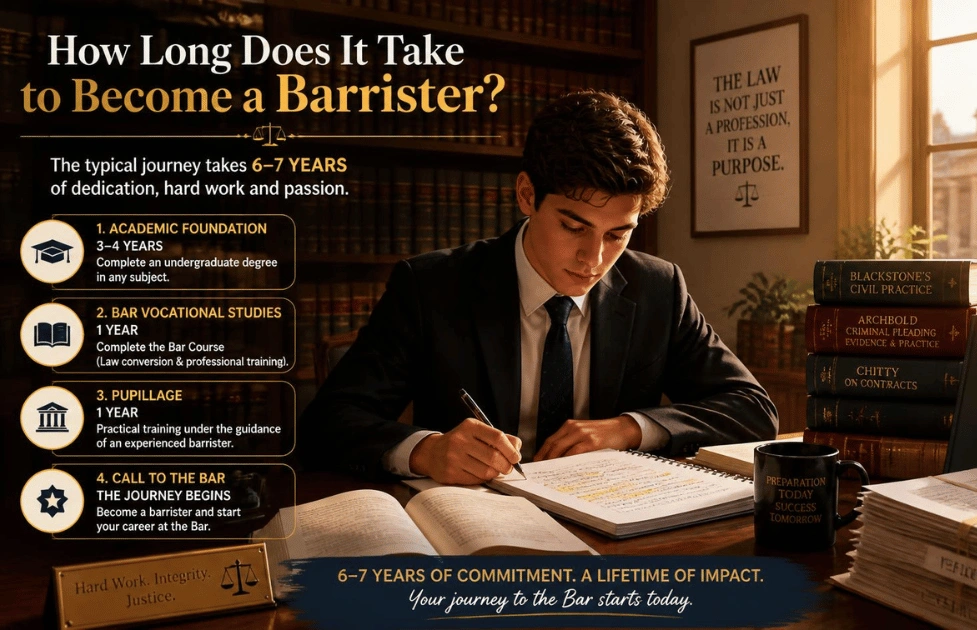
Ask ten pupils, and you will get ten different answers. How long it takes to become a barrister depends on two things: the courses, which run to a fixed timetable, and pupillage, which does not. Five years is the fastest realistic route in England and Wales. Plenty of people take seven. This guide walks through each stage, what it costs in 2026, and where the delays actually sit.
How Long Does It Take to Become a Barrister? Qualifying takes about five years from the first day of a law degree. That is three years for the LLB, one year on a bar training course, then twelve months of pupillage. Non-law graduates add a one-year conversion course, which makes six. Competition for pupillage stretches many to seven or eight years.
The Route at a Glance
| Stage | Typical length | Cost in 2026 |
| Undergraduate degree (law or any subject) | 3 years full-time | Standard university tuition |
| Law conversion course (PGDL), non-law graduates only | 1 year full-time, 2 years part-time | £9,700 to £15,200 |
| Bar training course (the vocational component) | 1 year full-time, up to 2 years part-time | £8,950 to £19,000 |
| Pupillage | 12 months | Paid, minimum £23,504 outside London |
| Law graduate, total | About 5 years | Plus any wait for pupillage |
| Non-law graduate, total | About 6 years | Plus any wait for pupillage |
Key Takeaways
- Five years is the floor, not the average.
- The Bar Professional Training Course no longer exists. Ten providers now run courses under their own names.
- Training fees alone run to roughly £9,000 to £19,000 before the conversion course.
- Pupillage pays a regulated minimum of £25,863 in London and £23,504 elsewhere from 2026.
- Fewer than half of Bar course graduates go straight into pupillage, and that gap is what really sets your timeline.
Stage one: your degree, three years
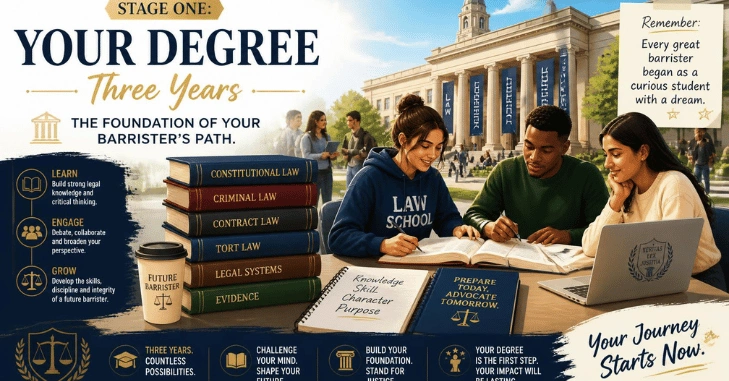
You need a degree at 2:2 or above. It does not have to be in law, and a fair share of the Bar reads history, classics, or physics first. That 2:2 is a regulatory floor rather than a competitive one. Bar Council figures from the most recent Pupillage Gateway round are blunt. Candidates with a first were more than twice as likely to receive an offer as those with a 2:1. Nobody holding a 2:2 or a third received one at all.
How Long Does It Take to Become a Barrister? Spend the three years building evidence, not just marks. Mooting, debating, and a stint as a court volunteer all count. Mini-pupillage counts most: among applicants who had done one, 9.9% received an offer, against 1.8% of those who had not.
Mini-pupillages also tell you what you are aiming at. A week in a criminal set feels nothing like a week in chambers taking instructions from a birth injury lawyer on a clinical negligence claim. Pick the work first, then pick the chambers.
Stage Two: The Law Conversion Course, One Year
Non-law graduates convert. The old Graduate Diploma in Law has largely been rebranded as the Postgraduate Diploma in Law, or PGDL, and some universities package it as an MA Law. Either way, it runs one year full-time or two years part-time.
You cover the seven foundations of legal knowledge: contract, criminal law, equity and trusts, EU law, land law, public law, and tort.
Fees for 2025/26 ran from £9,700 at Nottingham Trent to £15,200 at BPP in London. The University of Law charged £11,900 outside London and £14,850 inside it. Part-time study spreads the cost but adds a year to your timeline.
Stage Three: The Bar Training Course, One to Two Years

This is the stage most guides get wrong. The Bar Standards Board retired the Bar Professional Training Course under its training reforms. If a page still tells you to enroll on the BPTC, it is out of date.
Ten authorized education and training organizations now deliver the vocational component, each under its own course name:
| Provider | Course name | Fee, 2025/26 |
| City St., George’s, University of London | Bar Vocational Studies (BVS) | £8,950 (PGDip) |
| Nottingham Trent University | Barristers Training Course (BTC) | £12,900 (PGDip) |
| University of Law | Bar Practice Course (BPC) | £12,300 to £16,450 |
| Inns of Court College of Advocacy | ICCA Bar Course, two parts | About £16,200 |
| BPP University | Bar Training Course (BTC) | £19,000 (London) |
The ICCA splits its course into two parts. Part One is self-paced online study, £4,150 for the September 2026 and January 2027 intakes. Part Two is taught in person at the Inns for £12,061. Both figures include the regulator’s levy.
Join an inn before you start. All four Inns of Court are in London, and their deadline sits at least 12 weeks before the vocational component begins. Miss it, and you miss the intake.
Two centrally set exams sit inside this year, and they are the quiet timeline killer. In the August 2024 sitting, 45.3% of candidates passed civil litigation and 47.5% passed criminal litigation. A resit means waiting for the next window, which can push Call to the Bar back by six months or more. In 2023/24, 2,406 students enrolled in these courses. The queue behind you is long.
Stage Four: Pupillage, Twelve Months
Pupillage is the apprenticeship, and it lasts a year. The first six months are non-practicing: you shadow your supervisor, draft, research, and watch. The second six are practicing, and you appear in court on your own feet with your own papers.
It is paid work, not an internship. The Bar Standards Board sets a floor. From 2026 the minimum pupillage award is £25,863 a year in London and £23,504 outside it. The regulator lifted those figures after the Living Wage Foundation’s announcement of 22 October 2025, and commercial sets pay several times more.
What comes after is not automatic. Chambers usually decide on tenancy two or three months before pupillage ends. Pupils who miss out often take a third six elsewhere, adding another six months before they hold a permanent seat.
Know the money at the far end before you commit six years to it. According to the National Careers Service, a starting barrister earns £24,000 and an experienced one up to £250,000, for a working week of 40 to 48 hours.
Why Most People Take Longer Than Five Years

Here is the figure nobody puts on page one. The Bar Standards Board’s Annual Report on Bar Training 2024 found that 46% of UK-domiciled students who finished Bar training in 2020/21 had progressed to pupillage. That leaves 54% still waiting, still applying, or gone.
The Pupillage Gateway runs once a year. Miss a round, and you wait twelve months for the next one. Most people fill that gap as a paralegal or a county court advocate.
Three things stretch the clock:
- Reapplying for pupillage. Two or three application rounds are common, and each one adds a year.
- Exam resits. Civil and criminal litigation are centrally assessed, and roughly half the room fails at each sitting.
- Part-time study. Working through the conversion course or the Bar course doubles each of those stages.
Add one reapplication to the law graduate route, and you are at six years. Add a conversion course as well, and seven is normal.
How Long Does It Take to Become a Barrister as a Career Changer?
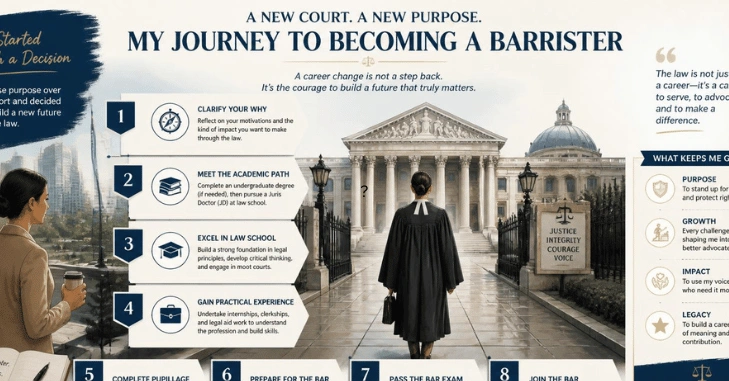
Later starters are common at the bar, and the arithmetic is kinder than it looks. A career changer with any degree needs the PGDL, the Bar course, and pupillage, so three years full-time from the day they leave their job.
Practicing solicitors have a shorter path. With Bar Standards Board approval, they sit the Bar Transfer Test, and exemptions can remove the vocational component and shorten pupillage. A work-based route also exists. It begins with a Level 6 Professional Higher Diploma in Law and suits paralegals building qualifications alongside a salary.
Your Next Step
How Long Does It Take to Become a Barrister? Work backwards from the deadlines. Inn scholarship applications close in early November for the following September, and that single date decides whether you fund the Bar course or borrow for it. Book a mini-pupillage this term, join an inn, then apply for the scholarship in the same cycle as your course place. Do those three in order, and you protect the five-year version of this timeline instead of the eight-year one.
Frequently Asked Questions
Two years, if everything runs to plan: one year on a bar training course and twelve months of pupillage. Add a year for every pupillage round you do not win.
Yes. Any degree at 2:2 or above works, followed by a one-year PGDL conversion course covering the seven foundations of legal knowledge.
Always. The Bar Standards Board sets the minimum award, and from 2026 it is £25,863 in London and £23,504 elsewhere. Many chambers pay well above it.
Yes, before the vocational component starts, and at least 12 weeks before. You also complete qualifying sessions with your inn ahead of being called to the bar.
You resit at the next sitting. Given pass rates near 45%, budget both the extra fee and the delay to call.