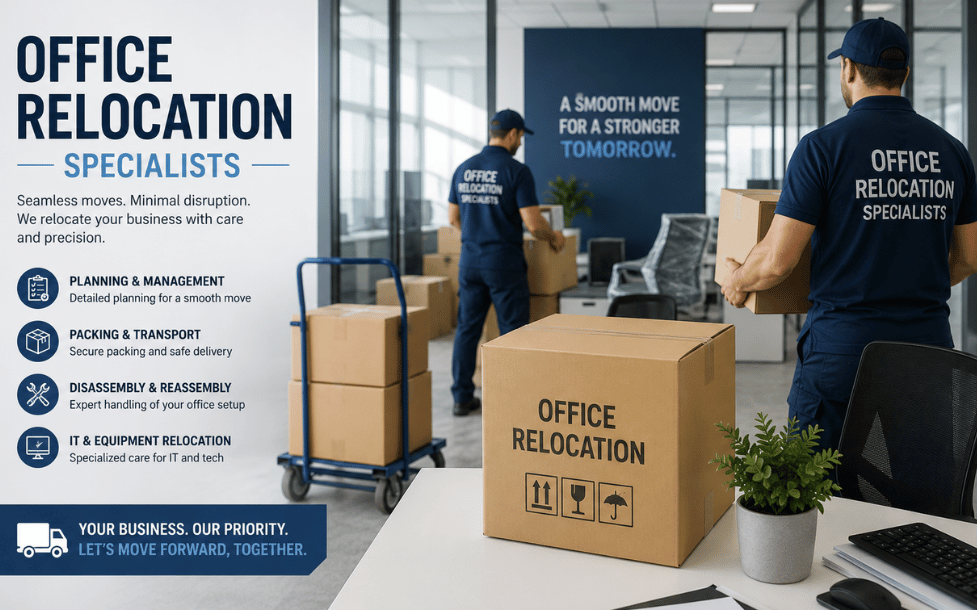
Office relocation is much more than just shifting desks, chairs, and computers from one place to another. It is a carefully coordinated transformation that can shape the future of a business. In today’s fast-moving corporate world, relocating an office is a strategic decision that involves detailed planning, precise logistics coordination, strong risk management, clear employee communication, and uninterrupted business continuity.
Whether a company is expanding into new markets, reducing costs, upgrading facilities, or moving to a more strategic location, the process requires expert handling at every stage. This is where professional office relocation specialists become essential, ensuring that the entire transition is smooth, efficient, and free from unnecessary disruption while keeping the business fully operational and productive.
| Section | Key Points |
| What Are Office Relocation Specialists? | Manage complete office moves; handle logistics, technology, and employees; and reduce downtime and risks. |
| Why Businesses Hire Them | Reduce disruption, improve efficiency, save time, protect equipment, and ensure a smooth transition. |
| Relocation Process | Assessment, site evaluation, strategy development, planning, execution |
| Planning | Set objectives, a timeline, and a budget for a smooth relocation. |
| Logistics Coordination | Inventory management, packing, labeling, and transportation coordination |
| New Office Setup | Workspace design, productivity focus, post-move evaluation |
| Technology Management | Move IT systems, protect data, and test systems after relocation. |
| Risk Management | Identify risks, assess vulnerabilities, and use insurance protection. |
| Business Continuity | Keep operations running using phased moves, remote work, and backups. |
| Communication | Keep employees informed and engaged throughout the move. |
| Choosing Specialists | Look for experience, skills, logistics strength, and good references. |
| Conclusion | Professional relocation ensures a smooth, safe, and efficient office transition. |
What Are Office Relocation Specialists?

Office relocation specialists are professionals who manage and coordinate business moves from start to finish, ensuring that every stage of the process is handled efficiently and with minimal disruption.
Unlike standard moving companies, they specialize in corporate relocations and fully understand the complexities involved in transferring office equipment, technology infrastructure, and employees. Their expertise helps organizations reduce downtime, minimize risks, and maintain smooth operational continuity throughout the transition.
Key responsibilities of office relocation specialists include developing relocation strategies, creating detailed move schedules and timelines, coordinating logistics and transportation, managing office furniture and equipment transfers, overseeing technology relocation, reducing business disruptions, and ensuring the new workplace is fully ready for use.
Why Businesses Hire Office Relocation Specialists
Office relocations involve numerous moving parts that can quickly become overwhelming without proper planning. Hiring specialists provides expertise and structure that significantly improves the likelihood of a successful move.
Key Benefits
- Reduced business downtime
- Improved move efficiency
- Better resource management
- Professional project oversight
- Reduced risk of equipment damage
- Enhanced employee coordination
- Faster transition into the new workspace
Understanding the Office Relocation Process
A successful office relocation requires careful planning and coordination well before moving day. A structured process helps minimize disruptions and ensures a smooth transition.
Assessment and Planning
The first step involves evaluating the current office, including its size, employee count, equipment, technology needs, budget, and relocation timeline. This assessment forms the foundation of the entire move.
Site Evaluation
The new office location should be assessed for accessibility, parking, internet connectivity, security, workspace capacity, utilities, and regulatory compliance. Early evaluation helps avoid future problems.
Relocation Strategy Development
Office relocation specialists create a customized plan that includes move objectives, budget allocation, resource planning, communication strategies, vendor coordination, technology migration, and risk management. A clear strategy keeps the relocation organized and aligned with business goals.
Effective Relocation Planning

Planning is one of the most important aspects of any corporate move, helping businesses minimize disruptions and ensure a smooth transition.
Establish Clear Objectives
Businesses should define the purpose of the relocation and set measurable goals, such as:
- Expanding office space
- Improving employee collaboration
- Reducing operating costs
- Accessing new markets
- Upgrading facilities
- Supporting company growth
Create a Realistic Timeline
A detailed schedule is essential for keeping the move on track. Important milestones include:
- Lease negotiations
- Facility preparation
- Vendor contracts
- Technology installation
- Packing and labeling
- Employee relocation
- Final move execution
Budget Planning
A comprehensive budget should account for all expected relocation expenses, including:
- Moving services
- Furniture transportation
- Technology relocation
- New office setup
- Employee relocation assistance
- Insurance coverage
- Temporary storage solutions
Logistics Coordination in Corporate Relocations

Logistics management is often the most complex part of an office relocation, requiring careful coordination to ensure a smooth transition. It begins with thorough inventory management, where all assets such as computers, servers, office furniture, telecommunications equipment, documents, records, and specialized tools are documented and categorized to prevent losses and maintain accountability.
To streamline the moving process, organized packing and labeling systems are used, including color-coded labels, department-based categorization, equipment identification tags, secure document packaging, and detailed inventory tracking, all of which help speed up unpacking and office setup at the new location.
Setting Up the New Office
| Area | Key Focus |
| Workspace Design | Space use, collaboration areas, private spaces, meeting rooms, technology setup, ergonomic design |
| Goal | Create a productive and efficient work environment. |
| Post-Move Evaluation | Check how successful the relocation was. |
| Evaluation Factors | Timeline, budget, employee satisfaction, technology performance, operational efficiency |
| Outcome | Improve planning for future relocations. |
Technology Relocation Management
- Technology systems are the backbone of modern businesses and require special attention during relocation.
Critical Technology Components
- Office moves often involve transferring key systems such as
- Computer networks
- Servers
- Cloud systems
- Telecommunications equipment
- Security systems
- Data storage devices
- Video conferencing equipment
- Specialists coordinate these systems to minimize operational interruptions.
Data Protection Measures
- Protecting sensitive information during relocation is essential.
- Important safeguards include the following:
- Data backups
- Encrypted storage
- Secure transportation
- Controlled access procedures
- Cybersecurity assessments
- These measures help maintain data security and protect business operations and client information.
Technology Testing
- Before employees begin working in the new office, all systems should be tested thoroughly.
- Testing should verify the following:
- Internet connectivity
- Network functionality
- Phone systems
- Security systems
- Software accessibility
- Hardware performance
Risk Management During Office Relocation

Every corporate move carries potential risks that must be carefully managed to ensure a smooth transition and minimal disruption to business operations.
Common Relocation Risks
Businesses may face several challenges during relocation, including equipment damage, data loss, project delays, budget overruns, operational disruptions, employee confusion, and compliance issues. Identifying these risks early allows organizations to implement effective preventive measures and reduce the likelihood of complications.
Risk Assessment Strategies
Relocation specialists conduct detailed assessments to identify vulnerabilities before and during the move. These assessments typically include facility inspections, technology evaluations, vendor reviews, compliance checks, and security assessments. Such proactive planning helps minimize unexpected issues and ensures better control over the relocation process.
Insurance Coverage
Insurance plays a critical role in protecting valuable business assets throughout the relocation process. Coverage may include protection against property damage, equipment replacement costs, transportation liability, and business interruption losses. Having adequate insurance ensures financial security and reduces the impact of unforeseen events during the move.
Business Continuity During Relocation
Maintaining business operations is a top priority during office moves.
Importance of Business Continuity
Operational disruptions can result in:
- Revenue losses
- Reduced productivity
- Customer dissatisfaction
- Missed deadlines
- Reputational damage
Business continuity planning helps minimize these risks.
Continuity Planning Strategies
Organizations can maintain operations by:
- Relocating in phases
- Scheduling moves during off-hours
- Utilizing remote work arrangements
- Establishing temporary workspaces
- Maintaining backup systems
These strategies help ensure uninterrupted service delivery.
Emergency Response Planning
Unexpected challenges can arise during any relocation.
Emergency plans should address:
- Technology failures
- Transportation delays
- Facility issues
- Security incidents
- Communication disruptions
Employee Communication and Engagement
Employee communication and engagement play a vital role in ensuring a successful office relocation, as keeping staff informed helps reduce uncertainty and encourages cooperation. Transparent communication should include key details such as relocation schedules, office layouts, transportation arrangements, workspace assignments, and any technology changes, with regular updates allowing employees to better prepare for the transition.
Choosing the Right Office Relocation Specialist

Selecting the right relocation partner is critical to project success.
Qualities to Look For
An effective office relocation specialist should offer the following:
- Corporate relocation experience
- Strong project management skills
- Technology relocation expertise
- Proven logistics capabilities
- Comprehensive insurance coverage
- Positive client references
Conclusion
Office relocation is a highly complex process that goes far beyond physically moving equipment and furniture. It requires strategic planning, precise logistics coordination, effective risk management, strong communication, and a clear focus on maintaining business continuity.
With the support of skilled office relocation specialists, businesses can manage every stage of the move more efficiently while minimizing downtime, protecting critical assets, and ensuring smooth technology and operational transitions.
Ultimately, a well-executed relocation not only reduces disruption but also creates opportunities for growth, improved productivity, and a more modern and efficient working environment for the future.
Apart from that, if you want to know more about then visit our Business Law category.
FAQs
Consultants from Home Services Relocators are experts who offer assistance and direction to companies and their relocating workers.
is the process of relocating a business’s personnel, operations, and physical assets.
Hiring a relocation agent can be very expensive, depending on the number of variables. For their services, you should budget between a few hundred and a few thousand pounds on average.
Relocating an office offers the chance to find space that can support both present requirements and future growth over the next three to five years.