Receiving a parking charge notice can be confusing because it may resemble an official council penalty. Private parking notices and council penalties are not the same thing. Your options depend on who issued the notice, where you parked, and what evidence supports the charge.
Direct answer: A private parking charge is usually a civil claim arising from parking terms on private land. You can pay it, challenge it with evidence, or use an independent appeal route after rejection. First identify the issuer, check the signs and dates, preserve evidence, and follow the deadline printed on the notice.
| Key question | General UK position |
|---|---|
| Who normally issues it? | A private parking operator or landowner |
| Is it the same as a council PCN? | No. Council Penalty Charge Notices follow statutory rules |
| Can you appeal? | Yes, using the operator’s stated appeal process |
| Typical private charge | Often up to £100 under current industry rules |
| Useful evidence | Photos, receipts, app records, timestamps and correspondence |
| BPA operator rejected your appeal? | POPLA may provide the next independent appeal stage |
| IPC operator rejected your appeal? | The Independent Appeals Service may apply |
| Can an unpaid charge reach court? | Yes, a private operator may pursue a civil claim |
Key Takeaways
- Check whether your notice says Parking Charge Notice or Penalty Charge Notice.
- Read the parking signs and compare them with the alleged breach.
- Keep photographs, payment records, app screenshots, letters and timestamps.
- Do not assume a private ticket can safely be ignored.
- Appeal to the operator first before using the applicable independent service.
- Check jurisdiction carefully because rules differ across the four UK nations.
What Is a Parking Charge Notice?
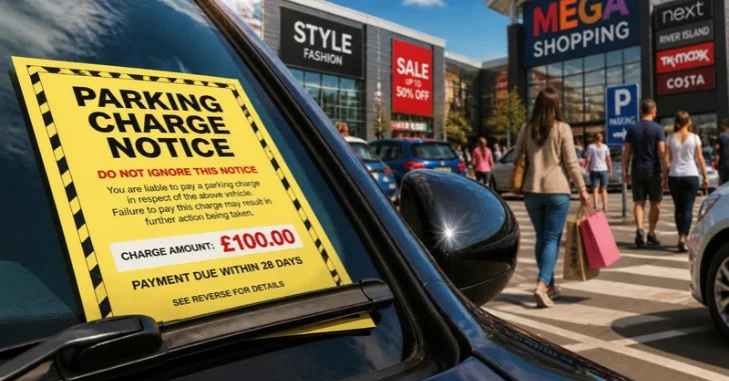
A private parking operator can issue this type of notice after an alleged breach on private land. Common locations include supermarkets, retail parks, hospitals, residential developments and privately managed station car parks. POPLA describes these notices as civil charges based on parking terms rather than statutory penalties.
This distinction matters because a council-issued Penalty Charge Notice follows a different legal process. Both are often shortened to “PCN,” which creates understandable confusion. POPLA recommends checking the issuer, wording and appeal information before deciding what action to take.
Private parking terms usually appear on signs displayed around the site. By parking there, a driver may be treated as accepting clearly communicated contractual terms. Citizens Advice says unclear signs can support a challenge when parking conditions were not properly communicated.
For more detail about genuine cancellation arguments, see Justic’s parking fines loopholes guide. It explains why a valid appeal depends on evidence or a legal ground rather than a technical trick.
Parking Charge Notice or Penalty Charge Notice?
The first task is identifying exactly what you received. A private operator normally issues a Parking Charge Notice on private property. A council or another public authority generally issues a Penalty Charge Notice under statutory enforcement powers.
| Feature | Private Parking Charge | Council Penalty Charge |
|---|---|---|
| Typical issuer | Private parking company | Council or public authority |
| Typical location | Supermarket or private car park | Public road or council car park |
| Legal basis | Usually contract law | Statutory enforcement |
| First challenge | Parking operator | Issuing authority |
| Later appeal | POPLA or IAS, where applicable | Relevant statutory tribunal |
| Criminal offence? | Normally no | Normally civil enforcement |
The distinction also determines which appeal body can consider your case. The Traffic Penalty Tribunal says it does not decide appeals against private parking notices. Its work covers qualifying local-authority penalties outside London and in Wales.
POPLA deals with qualifying private notices from British Parking Association Approved Operators. Drivers normally appeal to the operator before approaching POPLA. A rejected appeal should include the verification information needed for that next stage.
Should You Pay or Appeal?
Paying may make sense when the notice appears correct, and you have no meaningful defence. Many operators offer a reduced amount when payment is made within an initial period. Check the notice carefully because payment can also end your opportunity to challenge the charge.
An appeal may be stronger when the facts or evidence contradict the operator’s allegation. Examples include a valid payment, unclear signs, incorrect vehicle details or a payment-system failure. Evidence matters more than a general statement that the charge feels unfair.
Consider the amount at stake against the strength of your evidence and the deadlines involved. Do not miss a deadline while researching arguments online. Save a copy of everything you submit and keep proof of the submission date.
Grounds for Challenging a Parking Charge Notice
Private tickets can be challenged for several legitimate reasons. The strongest argument will depend on the alleged parking breach and the evidence available. You should focus on facts that directly answer the operator’s case.
You complied with the parking terms
A payment receipt or app record may show that you paid correctly. A timestamp could also establish that your vehicle was within the permitted period. Citizens Advice says evidence that you followed the displayed rules can support cancellation.
Check the registration number entered during payment before submitting your appeal. Small entry mistakes may be relevant under an operator’s current policies. Include the actual payment record rather than relying on memory.
The signs were unclear
Parking terms need to be communicated clearly enough for a motorist to understand them. Hidden, damaged or contradictory signs can weaken an operator’s contractual argument. Photograph the entrance and the signs visible from where the vehicle was parked.
Take wide photographs as well as close images of wording. A close image proves what a sign says but may not show whether a driver could reasonably see it. This combination can make your evidence easier to understand.
The payment machine or app failed
Technology failures can create genuine disputes about attempted payments. Citizens Advice recognises broken payment equipment as a possible reason to challenge a private ticket. Screenshots and photographs can make the account more persuasive.
Save failed-payment messages, bank attempts and app records immediately. Phone signal problems may also matter when an app was the required payment method. Explain exactly what you tried and what happened.
ANPR records do not tell the full story
Automatic Number Plate Recognition cameras usually record vehicle movements at access points. Those timestamps do not necessarily show the precise period when a vehicle was parked. Payment records and other evidence can therefore matter when timings are disputed.
ANPR information also involves the handling of vehicle-registration data. Justic’s data protection principles guide provides broader background about personal-data responsibilities. A data-protection argument should still relate to a genuine problem with the records or their use.
The operator is pursuing the wrong person
Private parking liability can involve separate questions about the driver and registered keeper. In England and Wales, Schedule 4 of the Protection of Freedoms Act 2012 can allow keeper liability when detailed requirements are satisfied. The circumstances differ in Scotland and Northern Ireland.
Documents can be important when a vehicle had been sold, hired or stolen. Keep DVLA documents, sale records, rental agreements or police references where relevant. Do not make assumptions about liability without checking the applicable jurisdiction.
What Evidence Should You Collect?
Evidence should be gathered before signs, machines or online records change. Your aim is to show what happened at the relevant time. A well-organised appeal is easier for an operator or adjudicator to assess.
Useful material can include the following items.
- photographs of every relevant parking sign;
- photographs showing the vehicle’s position;
- payment tickets and app receipts;
- bank or card transaction records;
- screenshots of app errors;
- timestamps and location records;
- the original notice and envelope;
- permits or Blue Badge information;
- vehicle sale or hire documents; and
- every appeal, response and rejection letter.
Keep original files wherever possible. Editing photographs can create unnecessary questions about reliability. Create a simple timeline linking your documents with the operator’s allegation.
How to Appeal a Private Parking Notice
Start with the appeal instructions printed on the notice. Private appeal procedures and deadlines vary by operator. Submit your evidence through the stated channel and keep confirmation that the appeal was received.
Your appeal should identify the notice and explain the exact reason it should be cancelled. Refer to supporting evidence beside each factual point. Avoid long arguments that do not address the alleged breach.
If a BPA Approved Operator rejects the appeal, POPLA may be available. POPLA describes itself as a free independent service for qualifying private parking appeals. It considers evidence from both the motorist and parking operator.
A different independent route may apply to an International Parking Community member. Follow the rejection letter rather than sending the case to the wrong body. The appeal information should explain your available next step.
What Happens If You Ignore the Notice?
Ignoring correspondence does not automatically make a private parking claim disappear. An operator may send reminders and could eventually pursue the alleged debt through civil proceedings. Whether it does so depends on the circumstances.
A court claim should not be confused with ordinary debt-collection correspondence. Formal court papers have response deadlines and should be taken seriously. Get appropriate legal advice if proceedings have started or the legal issues are unclear.
Private parking enforcement has attracted continuing regulatory attention. The Competition and Markets Authority announced action in July 2026 concerning appeals and additional charges. It also opened an investigation into certain practices by Euro Car Parks.
The Private Parking Rules in 2026
Private parking regulation remains an evolving area. The government consulted in 2025 on measures supporting a statutory private parking code under the Parking (Code of Practice) Act 2019. The consultation applies across England, Scotland and Wales.
The earlier government code published in 2022 was withdrawn. Drivers should therefore avoid treating its proposed charge levels as current binding law. Current operator obligations can instead depend on legislation, consumer law and applicable industry rules.
The volume of private notices also remains significant. RAC analysis reported 14.4 million tickets during the year ending March 2025. The CMA repeated that approximate figure when announcing its 2026 consumer-protection work.
Differences Across the UK
Parking law is not identical throughout England, Wales, Scotland and Northern Ireland. Keeper-liability rules under Schedule 4 have particular importance in England and Wales. Other nations use different legal and enforcement arrangements.
This means UK-wide advice needs jurisdiction checks before it is applied. An argument that works for one notice may be irrelevant to another. Read the notice and identify where the parking event happened before relying on a template.
Council enforcement also differs from private enforcement. Justic’s earlier guide to cancelling parking fines provides a broader comparison of these routes. Use the section matching your issuer rather than mixing council and private procedures.
When Should You Get Legal Advice?
Most routine parking disputes can be handled through the normal appeal procedure. Legal advice becomes more useful when court proceedings have started or significant sums are claimed. It can also help when liability turns on complicated contractual or procedural questions.
The underlying private-parking relationship often depends on contract principles. Justic’s contract-law coverage provides broader background on contractual obligations and breaches. Parking disputes still require analysis of their own facts and specific rules.
If you need individual help, you can also review Justic’s Find a Lawyer resources. Check that any solicitor you instruct is regulated by the appropriate professional body. This article provides general information rather than individual legal advice.
Your Next Step
Read the notice from top to bottom before paying or appealing. Identify the issuer, alleged breach, location, amount, and deadline. Then compare those details with your photos, receipts and other records.
If the evidence supports a challenge, make a concise appeal before the deadline. Keep copies and use the correct independent appeal route after any rejection. Seek individual legal advice if formal court proceedings begin or the liability issues are complex.
Frequently Asked Questions
Do I have to pay a parking charge notice?
Not automatically simply because you received one. You can challenge a private notice when you have a genuine factual or legal basis. Ignoring it without assessing the claim is different from making a supported appeal.
Is a private parking ticket legally enforceable?
A private parking operator can seek to enforce a valid charge through civil proceedings. That does not mean every notice is automatically correct. The operator may need to establish the contractual basis and applicable liability.
Can I appeal because the charge seems too high?
The amount alone may not be enough to defeat the charge. Courts can consider the legal basis and surrounding circumstances rather than comparing the amount with an hourly tariff. Other grounds, including unclear terms or factual errors, may provide a stronger challenge.
What happens after a private operator rejects my appeal?
Check which trade association the operator belongs to. BPA Approved Operators can fall within POPLA’s appeal system. IPC members use a different appeals arrangement, so follow the rejection notice.
Should I pay while appealing?
Citizens Advice advises motorists not to pay a ticket they are appealing because payment can be treated as accepting it. Check the operator’s terms and appeal instructions before acting. Keep written confirmation if the operator gives different instructions