Property-related accidents can happen almost anywhere, from supermarkets and shopping centres to offices, restaurants, hotels, rented homes, and public spaces. When an injury occurs because a property owner or occupier failed to maintain a safe environment, victims may be entitled to seek compensation under UK law.
This is where a premises liability attorney or specialist personal injury solicitor becomes invaluable. Understanding your legal rights after an accident can be confusing, especially when dealing with medical treatment, financial losses, and insurance companies.
Whether you’ve suffered a slip on a wet supermarket floor, an injury caused by falling objects, or an accident due to unsafe building maintenance, obtaining professional legal advice can significantly improve your chances of a successful claim. This guide explains UK premises-injury laws, settlement timelines, legal costs, victims’ rights, and what to expect throughout the claims process.
| Category | Details |
| Legal Area | Premises Liability / Personal Injury Law |
| Who May Be Liable? | Property owners, landlords, businesses, local authorities, occupiers, housing associations |
| Common Accident Types | Slip and fall, trip hazards, falling objects, defective stairs, inadequate lighting, unsafe flooring, dog attacks, construction site injuries |
| Relevant UK Laws | Occupiers’ Liability Act 1957, Occupiers’ Liability Act 1984, Health and Safety at Work Act 1974 (where applicable) |
| Who Can Make a Claim? | Visitors, customers, tenants, contractors, delivery drivers, and others injured due to unsafe premises. |
| Time Limit to Claim | Generally 3 years from the accident date (subject to legal exceptions) |
| Evidence Required | Medical records, accident reports, CCTV footage, witness statements, photographs, maintenance logs, expert reports |
| Settlement Timeline | Straightforward cases: 6–12 months; Complex cases: 12–24+ months |
| Legal Fees | Most solicitors offer No Win, No Fee agreements; success fee usually capped under UK regulations. |
| Typical Costs | Initial consultation: Free; Medical reports: £200–£900; Expert reports: £500–£3,000; Court fees vary by claim value |
| Compensation May Include | Pain and suffering, lost earnings, medical expenses, rehabilitation costs, travel expenses, future care, home adaptations. |
| Factors Affecting Compensation | Injury severity, liability evidence, financial losses, medical prognosis, long-term disability, contributory negligence |
| Settlement Methods | Direct negotiation, Alternative Dispute Resolution (ADR), mediation, or court proceedings if required |
| Benefits of Hiring a Solicitor | Evidence collection, insurer negotiations, legal advice, valuation of damages, court representation, maximising compensation |
| Best Practice After an Accident | Seek medical attention immediately, report the incident, preserve evidence, collect witness details, and obtain legal advice promptly. |
Understanding How a Premises Liability Attorney Can Help
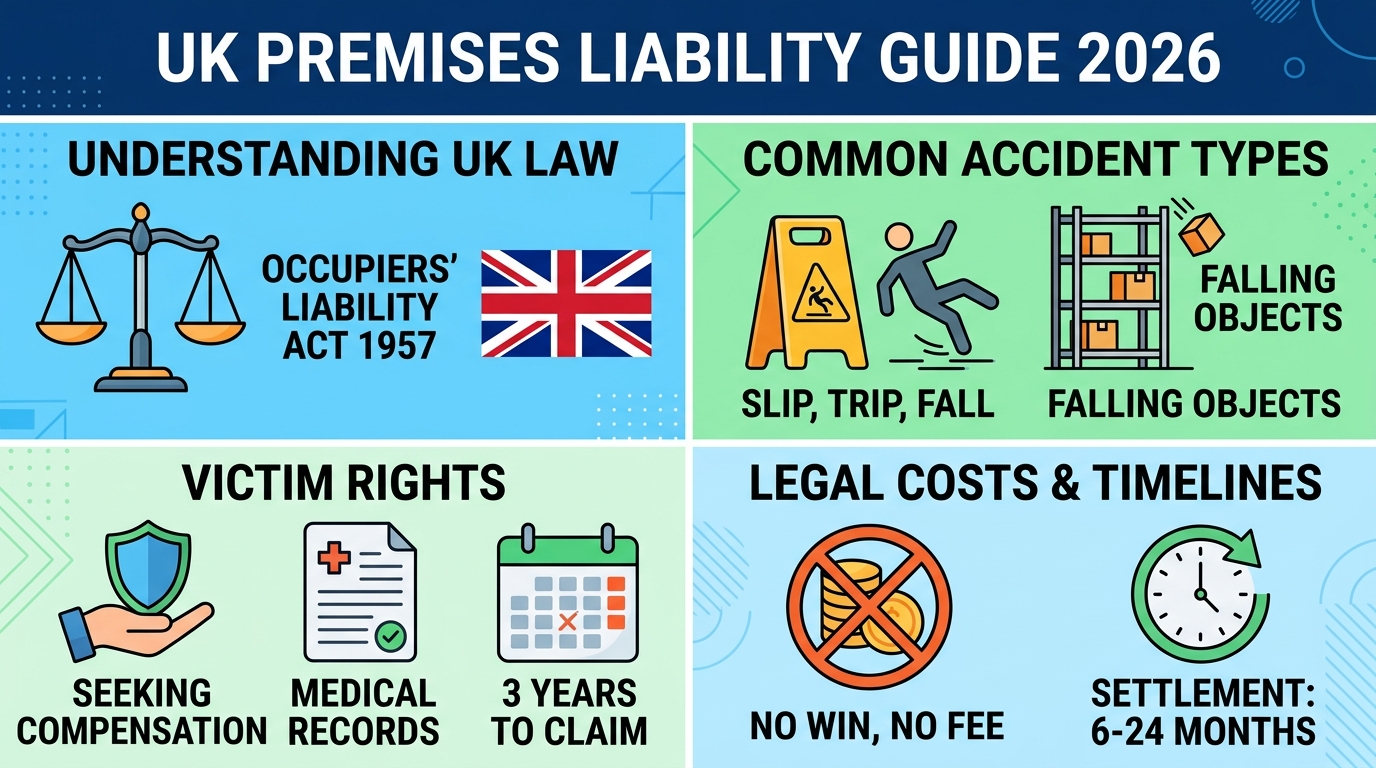
A premises liability attorney assists individuals injured because a property owner, landlord, business, or occupier failed to keep their premises reasonably safe. In the UK, these claims are commonly handled under the Occupiers’ Liability Acts 1957 and 1984.
Legal professionals investigate accidents, collect evidence, negotiate with insurers, and represent clients if court proceedings become necessary.
Common responsibilities include:
- Investigating liability
- Gathering medical and accident evidence
- Negotiating compensation settlements
- Advising on legal rights
- Representing clients during litigation if required
Professional guidance allows injured individuals to focus on recovery while their solicitor manages the legal process.
Common Types of Premises Injury Claims

Premises-related accidents occur in many different environments. Each case depends on whether reasonable safety measures were taken.
Some of the most common claims include:
- Slip, trip, and fall accidents
- Injuries caused by uneven pavements
- Falling merchandise in retail stores
- Poor lighting in stairwells or car parks
- Defective handrails or staircases
- Unsafe rental properties
- Dog attacks on private property
- Swimming pool accidents
- Construction site visitor injuries
Although every accident differs, proving negligence remains essential for a successful claim.
UK Premises Injury Claims at a Glance
| Category | Details |
| Main Legislation | Occupiers’ Liability Act 1957 & 1984 |
| Common Accident Types | Slips, trips, falls, unsafe buildings, falling objects |
| Typical Claim Time Limit | 3 years from the accident (subject to exceptions) |
| Who Can Be Liable? | Property owners, landlords, businesses, local authorities |
| Evidence Needed | Medical reports, photographs, CCTV, witness statements |
| Average Settlement Time | 6 months to 2 years depending on complexity |
| Legal Fees | Usually No Win, No Fee agreements |
| Typical Success Factor | Strong evidence proving negligence |
Who May Be Responsible?
Responsibility depends on who controlled the property at the time of the accident.
Potentially liable parties include:
- Private property owners
- Commercial businesses
- Retail stores
- Restaurants and hotels
- Local councils
- Landlords
- Housing associations
- Event organisers
Each owes a duty of care to lawful visitors under UK legislation.
Evidence That Strengthens a Claim
Strong evidence often determines whether a claim succeeds.
Useful evidence includes medical records documenting the injury, photographs of the accident location, CCTV footage, maintenance records, witness statements, incident reports, receipts for financial losses, and expert opinions where necessary. Preserving evidence soon after an accident greatly improves the likelihood of establishing liability.
Settlement Timeline Explained
One of the most common questions clients ask concerns how long compensation claims take.
A straightforward claim where liability is admitted may conclude within six to twelve months. More complex cases involving disputed responsibility, severe injuries, or multiple expert reports may require eighteen months or longer before settlement.
Several factors affect the timeline:
- Severity of injuries
- Availability of evidence
- Medical recovery period
- Insurance negotiations
- Court schedules if litigation becomes necessary
Patience often yields a more accurate assessment of long-term damage.
Legal Costs and No Win, No Fee Agreements

Most personal injury solicitors in the UK work under Conditional Fee Agreements, commonly known as No Win, No Fee arrangements. Under this system, clients generally pay nothing upfront. If the claim succeeds, the solicitor deducts a success fee from the compensation, subject to legal limits.
Typical legal costs include:
| Service | Estimated Cost |
| Initial consultation | Usually Free |
| No Win, No Fee success fee | Up to 25% of certain damages |
| Independent medical report | £200–£900 |
| Expert engineering reports | £500–£3,000 |
| Court fees (if applicable) | Varies by claim value |
Always request a written explanation of costs before signing any agreement.
Compensation That May Be Available
Compensation usually consists of two categories.
General damages compensate for pain, suffering, and loss of amenity caused by the injury.
Special damages reimburse measurable financial losses such as:
- Medical expenses
- Rehabilitation costs
- Lost earnings
- Future loss of income
- Travel expenses
- Home adaptations
- Care and assistance costs
Every case is assessed individually based on its circumstances.
Your Rights After a Property Accident
Victims have several important legal protections under UK law. These rights include seeking medical treatment, obtaining legal representation, requesting copies of accident reports, preserving evidence, negotiating with insurers, and pursuing compensation where negligence can be proven. Understanding these rights early helps prevent mistakes that could weaken a future claim.
Choosing the Right Solicitor

Selecting experienced legal representation can influence the outcome of a case.
Consider the following when comparing firms:
- Experience with premises injury claims
- No Win, No Fee availability
- Independent client reviews
- Clear communication
- Transparent fee structure
- Trial experience if settlement fails
A solicitor who regularly handles similar claims will understand the challenges involved.
Can Most Cases Settle Without Court?
Fortunately, many premises injury claims conclude through negotiated settlements without requiring a full court trial. Insurers often prefer settlement once sufficient evidence establishes liability.
However, if responsibility remains in dispute or compensation offers are inadequate, court proceedings may be necessary to secure a fair outcome.
Although litigation can extend the process, experienced solicitors prepare every case thoroughly from the outset, strengthening their negotiating position and increasing the likelihood of achieving a favourable resolution.
Conclusion
A premises liability attorney can play a vital role in helping injured individuals understand their legal rights and pursue fair compensation following an accident caused by unsafe property conditions. From investigating evidence and negotiating with insurers to representing clients during litigation, experienced legal professionals provide valuable support throughout the claims process.
Whether your injury occurred in a supermarket, workplace, rented property, or public space, acting promptly, preserving evidence, and seeking qualified legal advice can significantly improve your prospects.
By understanding UK premises injury laws, settlement timelines, legal costs, and available remedies, victims can make informed decisions and confidently protect their legal rights after an accident.
Want to know about What Is Commercial Awareness? A Complete Guide and Comprehensive Overview of Modern Business Thinking, Skills, Retail, and More info Check out our Legal Advice category.
Frequently Asked Questions
While not legally required, experienced legal representation often improves the chances of obtaining fair compensation and navigating complex procedures.
“Premises” refers to a piece of property, while “liability” means legal responsibility. Therefore, a premises liability injury occurs when you are hurt on someone else’s property due to their negligence, making the property owner legally responsible for your damages.
Most claims must be filed within 3 years of the accident date, although exceptions apply to children and individuals lacking mental capacity.